
Short answer: yes, and it is one of the most common things buyers ask us to do. Aluminium trim can be finished in a wood effect that sits in the same colour family as your door, wardrobe front or flooring. The finish is built from two parts — a powder-coated base colour and a wood effect paper transferred onto it by heat — and both parts have to be chosen together before the tone is right.
What the process cannot do is turn aluminium into timber. It can make a trim read as the same family of colour in the same room, which is what most projects actually need.
What matching means in practice
A door and a trim are two different materials with two different surfaces. A door has a pattern that runs with the panel and changes as you move past it; an aluminium profile has a straight face and a machined edge. Even with the right paper, the trim will not be a chemical copy of the door.
What it can be is coherent. At normal viewing distance, in the same room and under the same light, a correctly matched trim stops drawing attention to itself: the eye reads skirting, edge trim and door as one scheme rather than three separate purchases.
If what you need is an exact reproduction of the door surface rather than a neighbouring tone, that is a different process — wood film wrapping — and we will cover it on its own.
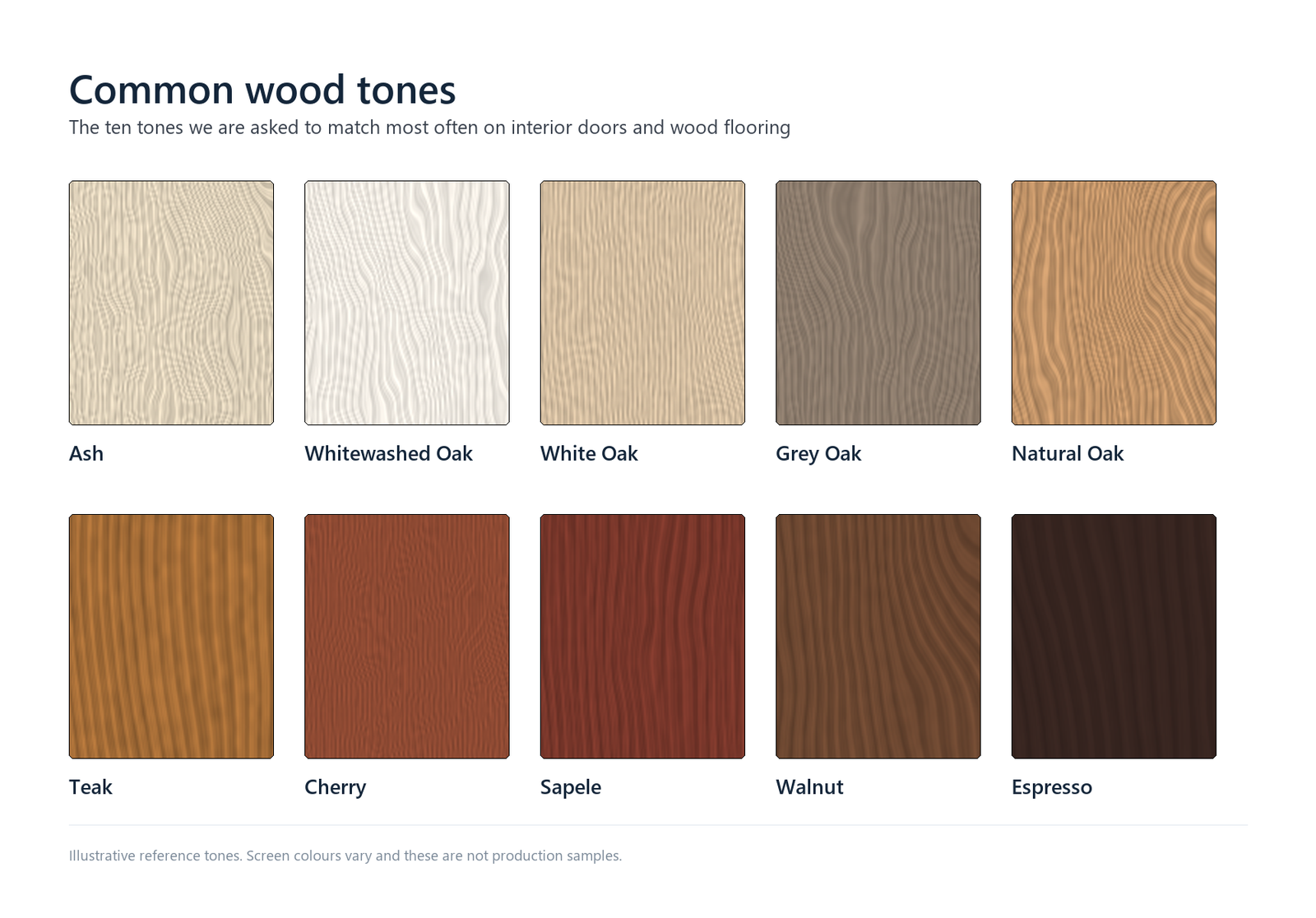
The finishes we run
Our standard range covers ten finishes: silver, gold, grey, black, white, bronze, rose gold, champagne, stone effect and wood effect. The metal colours and the stone effect exist so that a single project can stay in one family across tile trim, skirting and flooring profiles without switching supplier between rooms.
This article is about the wood effect. It is the finish with the most variables and the one that generates the most questions.
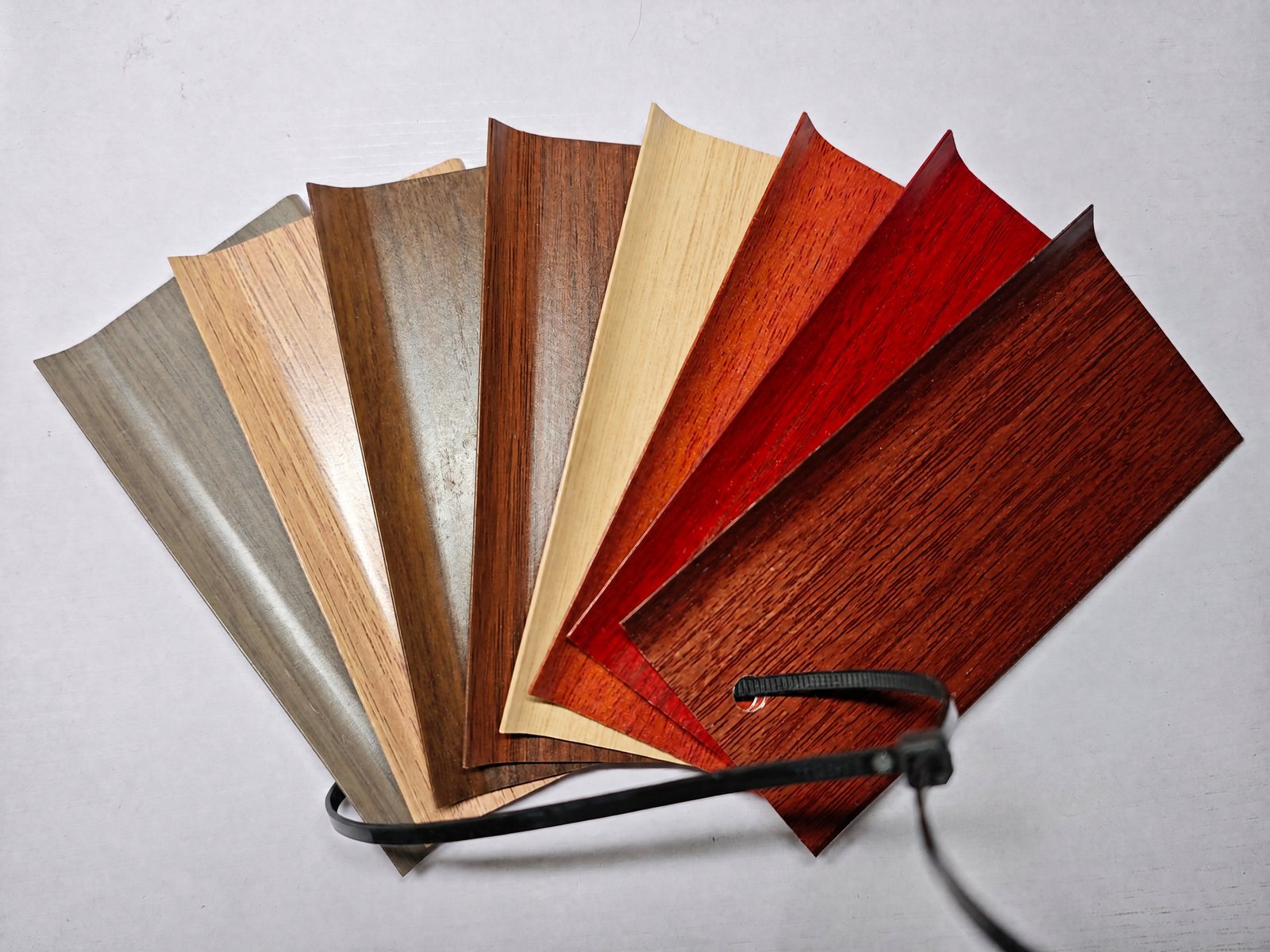
How the wood effect is made
The profile is powder coated first, then a wood effect paper is applied under heat and pressure so the pattern bonds into the coating. Two things follow from that sequence, and both matter when you are choosing a colour.
The base coat is part of the colour. The paper carries the pattern rather than the whole tone. The same paper laid over a light base and over a dark base gives two noticeably different results, because the base is visible through the pattern and sets how warm or how grey the finished face reads. This is why we do not quote a wood effect from a paper swatch alone — the paper is only half of the answer.
The finish is a surface, not a veneer. It does not peel at an edge or lift at a cut, which is the practical reason this finish is used on trim rather than on a laminated board.
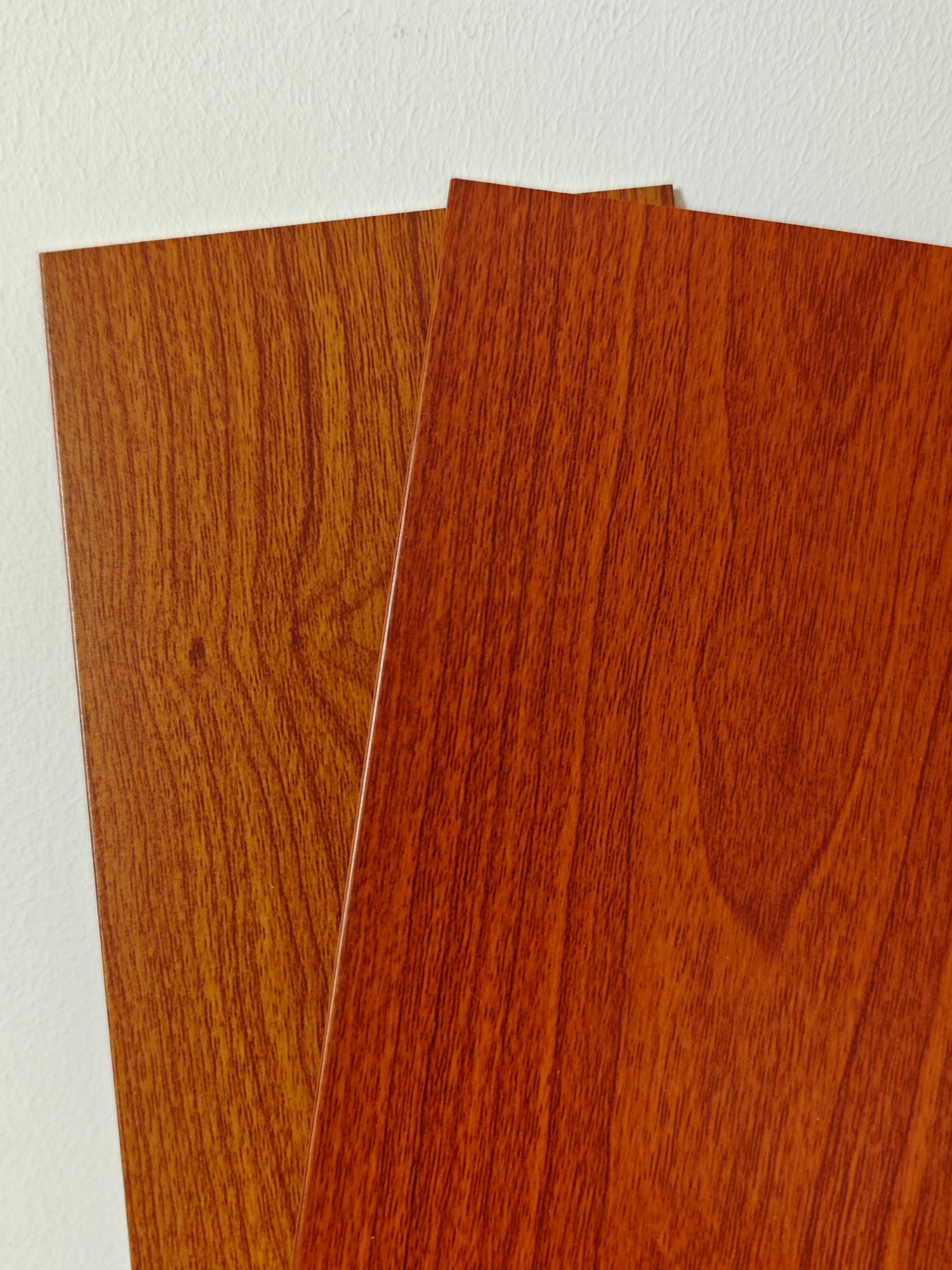
Two wood effect surfaces photographed close up, to show the texture rather than the colour: how deep the grain reads, and how it sits on the surface.
What to send us
The quality of the match depends on what we are given. Three things make it fast:
- A photo of the door, floor or wardrobe front in daylight. No filter, no flash, one shot of the whole panel and one close-up of the surface. Indoor evening light pushes everything warm and will send the match the wrong way.
- A physical sample, if the tone is critical. An off-cut, a spare plank, a drawer front, a leftover tile. A sample removes the guesswork that a photo leaves in.
- The profile, the quantity and the length you need. Colour and volume are quoted together, for reasons set out below.
How we compare
We lay your sample or photo against the papers and powders we already hold, and pick out the two or three closest options. You get those back as a photo with the differences described in words, so you know what you are choosing between.
From there we make a sample length in the chosen finish before anything goes to a production run.
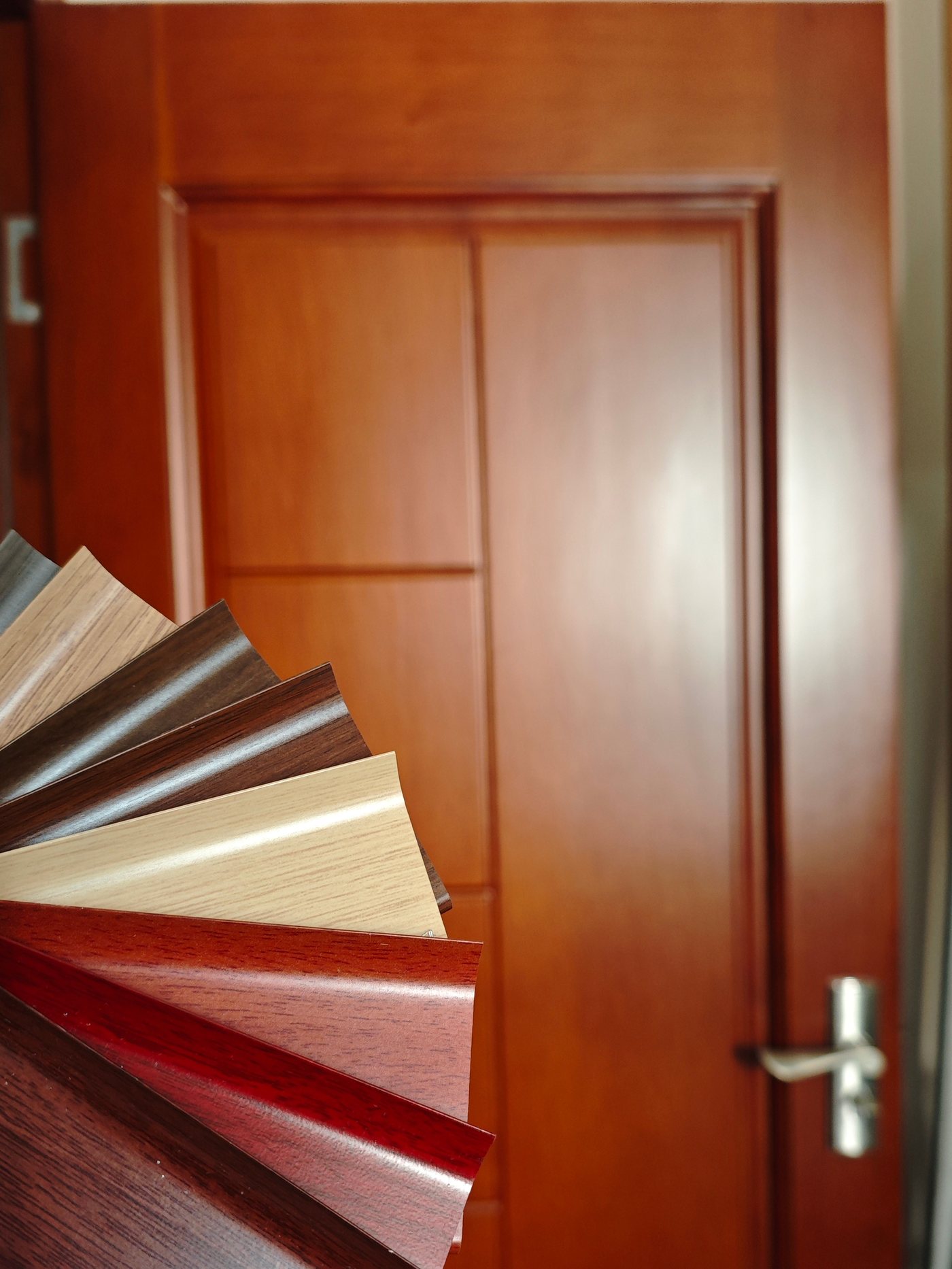
Checking a sample fan against a door in the room where it will be installed. Indoor light is warmer than daylight, and it moves every tone.
Minimum order for a special wood effect
This is where most enquiries slow down, so it is worth being direct.
If the effect you want is a paper and a powder we already hold, a small quantity is not a problem — we are set up for short runs and the colour itself creates no minimum.
If it is a colour we do not hold, the requirement comes from the powder. Powder colours are tinted in batches, and a colour that is not in stock has to be ordered in as a tinted batch: the size of that batch, not the size of your project, sets the minimum. This is why we confirm the figure after seeing your colour rather than quoting one up front — it depends on how far your door is from a powder we already run.
Two practical consequences:
- Send the colour first. A quantity question cannot be answered usefully before we know the colour.
- If your door is close to something already in our range, the gap may be small enough that no special batch is needed at all. That is worth checking before you assume a minimum applies.
Where the same effect will be ordered repeatedly, the calculation changes again — one tinted batch can cover more than a single order, which can make a special colour reasonable across a programme of work. If that is your situation, say so and we will price it on that basis rather than as a one-off.
Lead time
Stock finishes follow our normal schedule: samples in 7–10 days, bulk in 15–20 days, with drawings back within 24 hours of a confirmed requirement. A special colour adds the time needed to bring the powder in, and the exact figure is confirmed with the colour.
Questions we get asked
Can aluminium trim be made in a wood effect that matches my door?
Yes. A powder-coated base plus a wood effect paper gives a trim in the same colour family as the door. Send a daylight photo or a physical sample and we will tell you which of our papers is closest.
How do you match a trim colour to a door or floor?
We compare your sample or photo against the papers and powders we hold, send you the closest two or three options with the differences described, then make a sample length in the chosen finish before the bulk order.
Is there a minimum order for a special wood effect?
Only when the colour is not one we hold. Colours already in our range can be supplied in small quantities; a new colour has to be tinted and ordered in as a batch, and we confirm the requirement once we have seen your colour.
Send us the door
If you have a door, a floor or a wardrobe front you need to sit alongside an aluminium trim, send a photo in daylight and the quantity you have in mind. You will get the closest papers back with an honest note on where the difference will show, and a sample length before anything is committed to a production run.
Contact us with the photo, or send it on WhatsApp and we will come back with the paper options.